
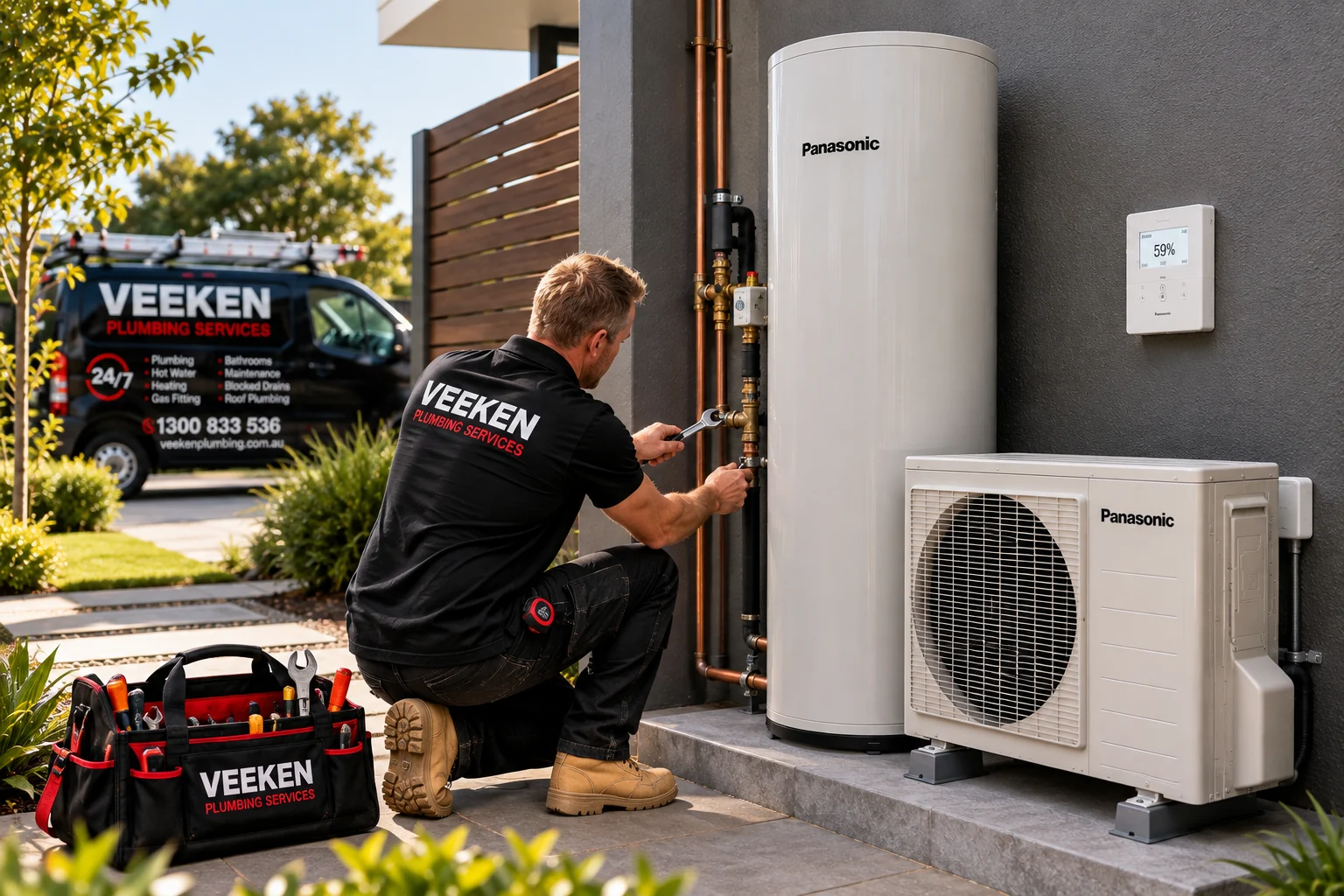
Hot Water Replacements Services
Veeken Plumbing provides hot water replacements support as part of our hot water systems services across Melbourne’s Eastern Suburbs.
- Fault finding and practical advice
- Repair, replacement and maintenance options
- Licensed workmanship and clear communication
- Compliance documentation where required
Compare The Main Pathways
The Existing System Is A Starting Point, Not Always The Final Answer
Like-for-like replacement can reduce changes in some properties, while a different system type may better suit future use. Each option brings its own installation and operating considerations.
Heat Pump Hot Water
Heat pumps store water and transfer heat from surrounding air. Demand, location, airflow, noise-sensitive areas, drainage, electrical supply and model performance all need consideration.
Electric Storage
Electric storage can be a practical arrangement where the supply, capacity and operating schedule suit the property. The condition of existing wiring and controls forms part of the installation review.
Gas Storage
Gas storage replacement depends on the gas service, ventilation or flue arrangement, equipment location, capacity and the current rules applying to the proposed work.
Continuous Flow
Continuous-flow systems heat water as it is used. Simultaneous outlet demand, flow, gas or electrical requirements, venting and controller arrangements affect suitability.
Planned Replacement
More Time Creates More Choice
If an ageing system is still operating, a planned replacement allows time to compare system types, inspect the proposed location, review associated trades and confirm product availability before hot water is lost.
Planning is particularly useful when changing energy source, relocating equipment, coordinating tenants or arranging work at a business that cannot easily operate without hot water.
Failed System
Urgency Does Not Remove The Site Requirements
When hot water is already unavailable, we first need the existing system details, fault and access information. A failed unit may still be repairable; if it is not, the replacement must suit the property and be installed with the required plumbing, gas or electrical work.
We explain the likely scope after assessment rather than promising one fixed changeover time for every property.
From Existing System To New Equipment
Our Hot Water Replacement Process
The sequence is consistent, but the work within each stage depends on the system, site and selected replacement option.
Understand The Requirement
We discuss the existing system, fault, current hot water use, urgency, access and any preferred replacement pathway.
Assess The Site
We review equipment position, available services, capacity, pipework, drainage, ventilation, access and relevant installation constraints.
Compare Practical Options
We explain suitable system types, associated work and important limitations before a replacement option is selected.
Install And Coordinate
The required licensed trades complete the plumbing, gas or electrical work included in the agreed installation.
Test And Handover
The system is commissioned, main controls are explained and applicable installation or compliance documentation is provided.
Product availability, access and associated plumbing, gas or electrical work can affect timing. We explain what the property needs before work proceeds.
Capacity And Recovery
Size The System Around Real Use
Occupant numbers are relevant, but demand also depends on shower length, baths, consecutive or simultaneous use, peak periods and how quickly stored water needs to recover. A business may have a very different demand pattern from a household even when total daily use appears similar.
The existing unit and water-use history provide useful evidence. We also ask whether routines, tenancy, staff numbers or the number of outlets have changed. A larger system is not automatically better; unnecessary capacity can add purchase and operating cost.
Associated Work
A Complete Replacement Includes More Than The Appliance
Connections And Controls
Pipework, valves, tempering arrangements, controllers and isolation points need to suit the selected system and installation. Existing components are assessed rather than assumed reusable.
Energy Supply
Changing or upgrading equipment can require electrical or gas work. The available supply, protection, connection route and any required licensed trade coordination form part of the scope.
Position, Drainage And Access
Equipment needs a suitable position with safe service access. Heat pumps add airflow and noise considerations; gas equipment adds ventilation or flue requirements; every system needs appropriate pipework and drainage.
Common Questions
Hot Water Replacement FAQs
Do I need to replace my hot water system with the same type?
Not always. The existing system is one option, but available energy, hot water demand, equipment position, installation requirements and customer preferences may make another pathway practical. We explain the associated work before you choose a different system type.
How do you decide what size hot water system is needed?
We consider occupancy, showers and baths, simultaneous use, peak periods, recovery and the performance of the existing system. The final selection also depends on the characteristics of the proposed equipment and the property.
Can you replace a failed system urgently?
Contact us with the system details, fault, location and access requirements. We will discuss the available pathway, but attendance and completion depend on assessment, availability, access and the plumbing, gas or electrical work required. We do not promise one response time for every enquiry.
Can you help compare heat pump hot water with my existing system?
Yes. Heat pump suitability depends on demand, location, airflow, noise-sensitive areas, drainage, electrical supply and the proposed model. Our dedicated Heat Pump Hot Water page explains these considerations and current rebate pathways in more detail.
Will the old hot water unit be removed?
Removal and disposal can be included with the replacement. We confirm what is included, together with any access limitation or site preparation, before the work proceeds.
Do you replace hot water systems in rental and commercial properties?
Yes. Provide the site contact, authority to approve work, access arrangements and any operational or occupant requirements. Commercial demand and downtime may require a more detailed assessment than a typical household replacement.
Hot Water Systems
Explore the parent hot water systems page for broader service information.
Recent Hot Water Systems Work
Explore completed Hot Water Systems work from Veeken Plumbing.
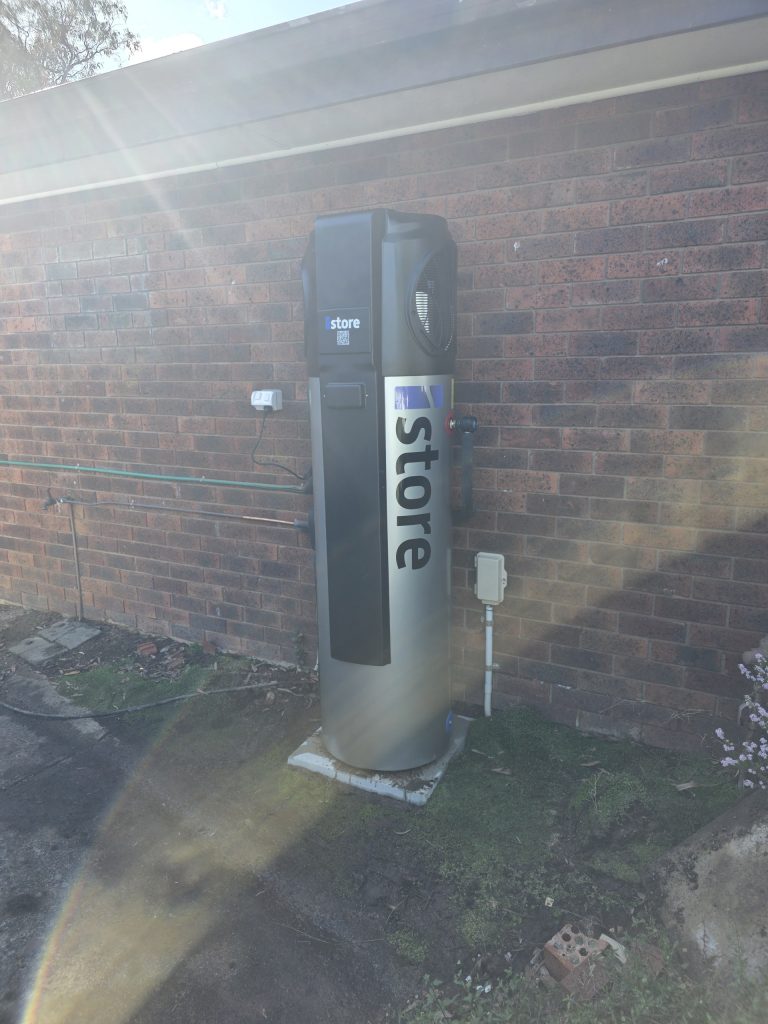
iStore 180 L R290 Heat Pump Hot Water Changeover in Boronia
A failed Vulcan Freeloader gas storage hot water unit replaced with an iStore 180 L R290 all-in-one heat pump hot water system.
View iStore 180 L R290 Heat Pump Hot Water Changeover in Boronia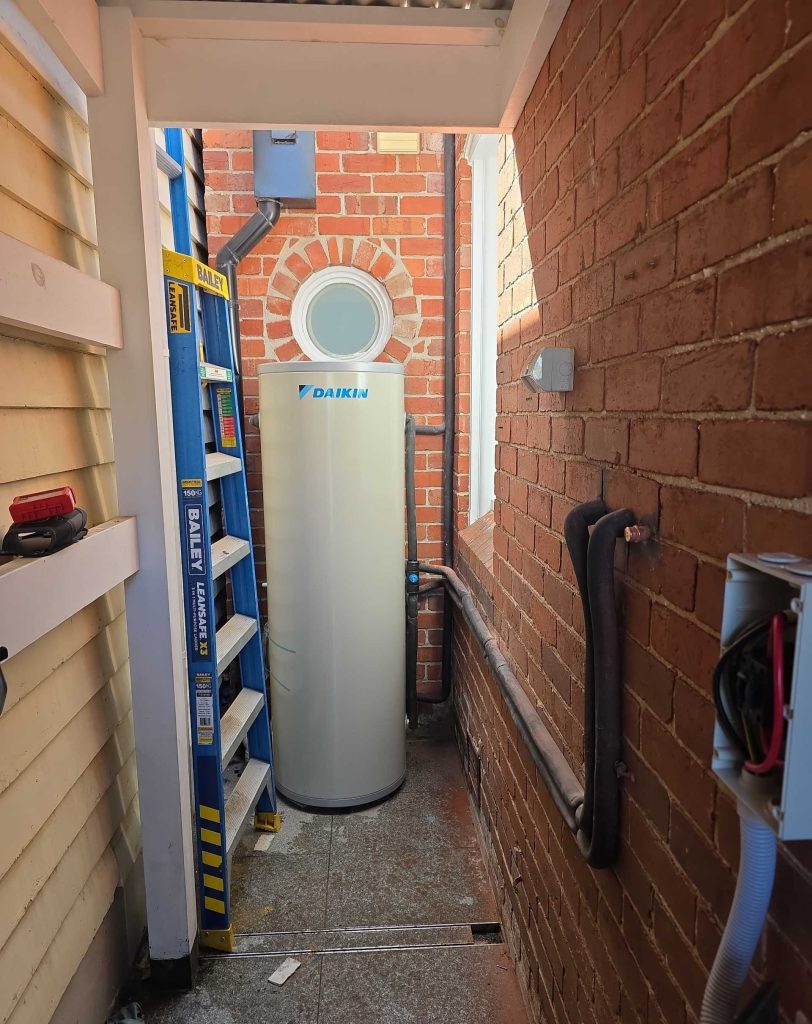
Daikin CO2 Heat Pump Hot Water Changeover in Middle Park
A wall-mounted Rinnai instantaneous gas hot water unit changed over to a Daikin CO2 split heat pump arrangement, with the storage tank in a narrow side passage and the outdoor…
View Daikin CO2 Heat Pump Hot Water Changeover in Middle Park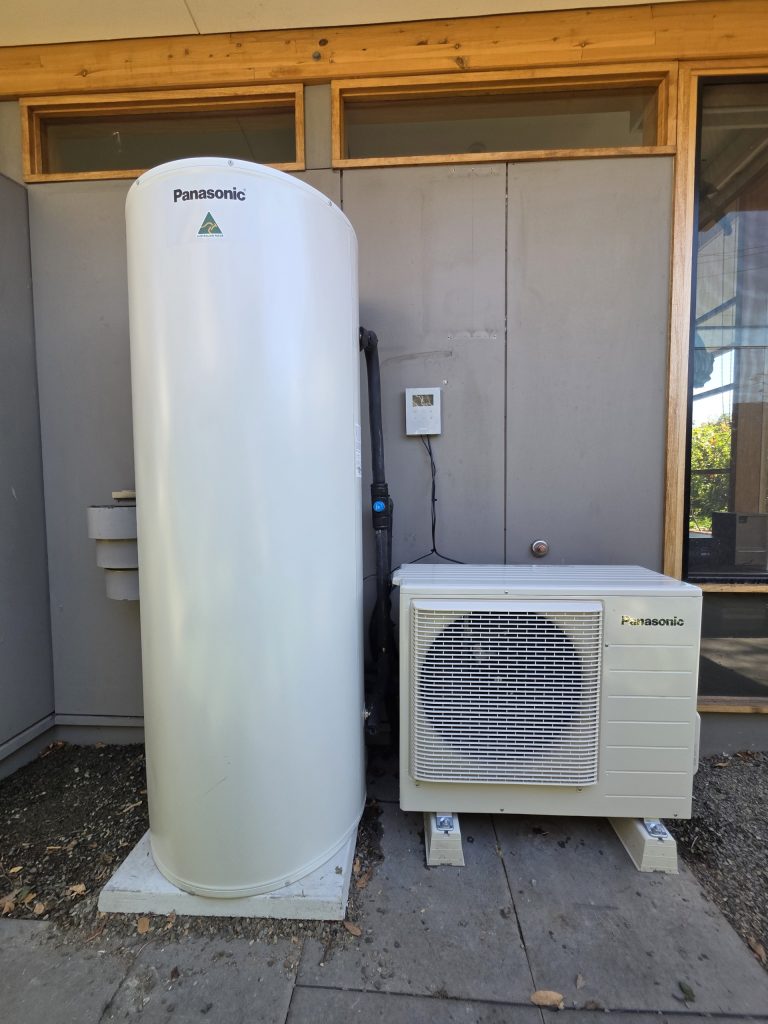
Panasonic CO2 Heat Pump Hot Water Upgrade in Clifton Hill
An ageing gas instantaneous hot water system replaced during a home renovation with a Panasonic CO2 split heat pump, 250 litre stainless steel cylinder, 4 kW outdoor unit and Wi-Fi…
View Panasonic CO2 Heat Pump Hot Water Upgrade in Clifton Hill