
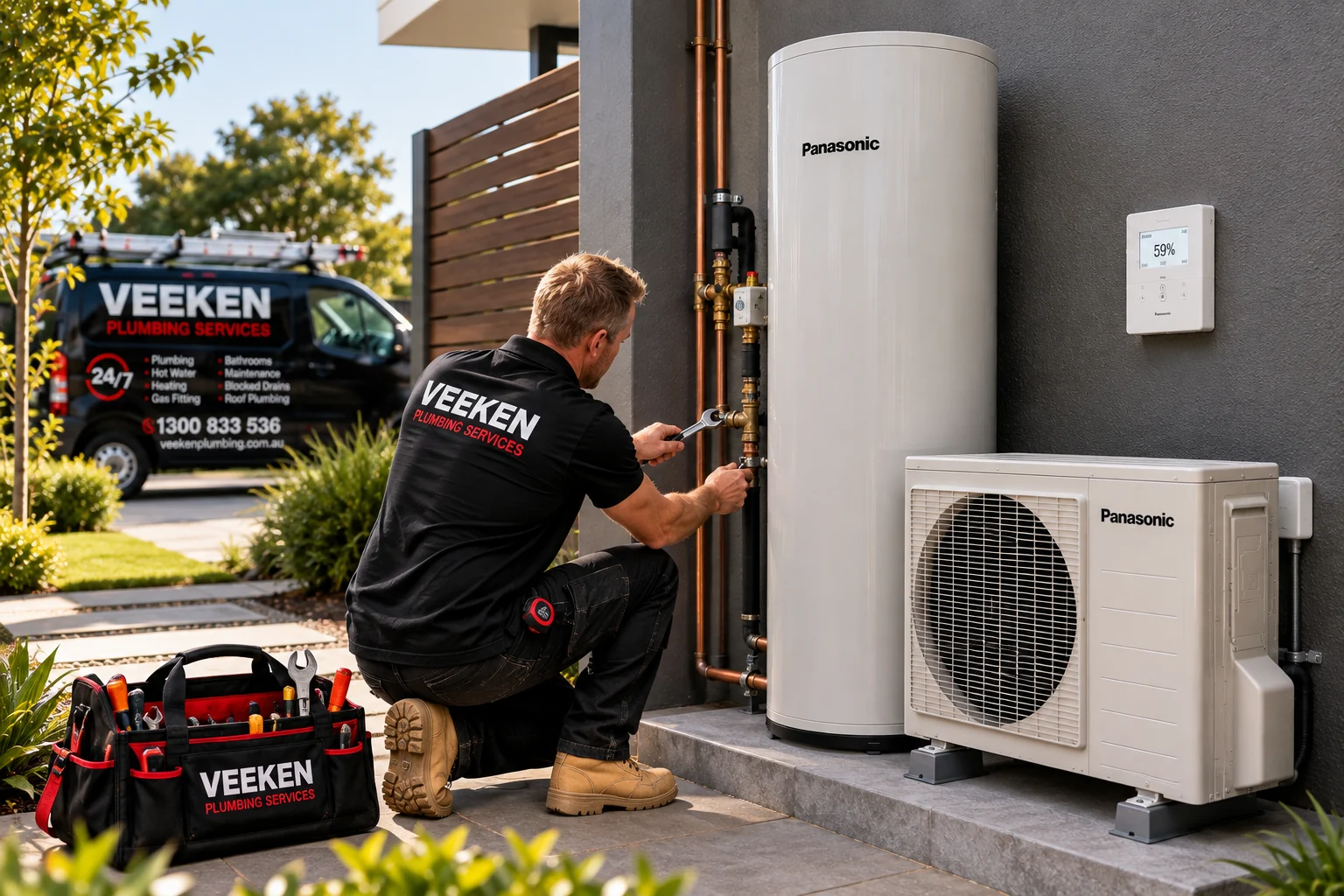
Continuous Flow Hot Water Services
Veeken Plumbing provides continuous flow hot water support as part of our hot water systems services across Melbourne’s Eastern Suburbs.
- Fault finding and practical advice
- Repair, replacement and maintenance options
- Licensed workmanship and clear communication
- Compliance documentation where required
How Performance Is Affected
Flow, Demand And Available Services Work Together
Water Flow
The appliance needs suitable water flow to start and continue operating. A problem at one outlet can involve the fixture or flow condition, while a problem at every outlet can point to the appliance or supporting services.
Simultaneous Demand
Running showers, sinks or other outlets together increases the total hot water requirement. The selected unit and installation need enough capacity for the property’s realistic peak demand.
Gas, Electricity And Controls
Depending on the model, operation can rely on gas supply, electrical power, ignition, sensors and controllers. A fault in one supporting service can appear as a hot water problem.
Fault Patterns
Tell Us When The Temperature Changes
No Ignition Or No Hot Water
Record any fault code and whether gas or electricity is available to other equipment. Do not remove appliance covers or repeatedly restart equipment that appears unsafe.
Hot, Then Cold
Temperature dropping during use can relate to flow changes, demand, controls, supply or an appliance fault. Note which outlets are running when the change occurs.
One Outlet Behaves Differently
If the problem occurs only at one shower or tap, the fixture, flow or local mixing arrangement may need investigation rather than assuming the central hot water unit is responsible.
Selecting A Replacement
Choose Capacity Around Peak Use, Not Only Daily Use
A property may use a manageable amount of hot water across the day but still create high demand when two showers and a sink operate together. Continuous-flow selection needs to account for those simultaneous outlets and the incoming conditions the proposed unit is designed to handle.
The existing gas pipework or electrical supply may not suit every replacement model. Changing capacity, fuel or appliance position can require associated work that should be identified before equipment is ordered.
Continuous-Flow Assessment
From Reported Fault To Practical Recommendation
The right next step depends on whether the issue sits with the appliance, the outlet conditions, the supporting services or the way demand is being placed on the system.
Describe The Pattern
Tell us which outlets are affected, when temperature changes, whether multiple outlets are running and any code shown.
Identify The System
Confirm the make, model, controller arrangement, energy source and relevant service or repair history.
Assess Appliance And Services
Investigate the accessible water, gas or electrical conditions and appliance operation relevant to the reported fault.
Explain Repair Or Replacement
Outline the practical repair, service or replacement pathway and any supporting work required.
The checks and trades required vary by model and energy source. We confirm the scope after reviewing the installed equipment.
Repair And Servicing
Use Fault History To Avoid Repeated Guesswork
Fault codes, the outlets in use and the conditions under which the system stops are valuable evidence. A service record also helps identify whether the appliance has had the same fault before or whether performance has gradually changed.
A repair may be practical when the fault is confirmed, parts are available and the equipment remains suitable. Servicing should follow the installed model and manufacturer information rather than one generic checklist.
Other Hot Water Pathways
Continuous Flow Is One Of Several Options
If replacement is required, a continuous-flow system can be compared with gas storage, electric storage and heat pump hot water where the property supports those options.
The best pathway depends on hot water demand, available services, equipment position, installation work and customer priorities. See Hot Water Replacements for the broader decision process.
Common Questions
Continuous-Flow Hot Water FAQs
Does continuous-flow hot water mean unlimited hot water?
The system heats water while it is being used, so it is not limited by a stored tank volume. It still has a rated capacity, and performance can be affected by total flow, simultaneous outlets, incoming conditions and the available energy supply.
Why does the water go hot and then cold?
Flow changes, simultaneous demand, supply conditions, controls or an appliance fault can all contribute. Note which outlets are operating, whether the issue occurs at every fixture and any displayed fault code.
Why does one tap work but another does not trigger hot water?
The flow or fixture at that outlet may be part of the issue, although the appliance and system still need assessment. Tell us which outlet is affected and whether the problem changes when another hot outlet is opened.
Can a continuous-flow unit serve several showers?
That depends on the proposed appliance capacity, flow conditions and the property’s simultaneous demand. Selection should be based on the outlets likely to operate together, not only the total daily hot water use.
Can you repair and service continuous-flow systems?
Yes. We assess faults and servicing requirements according to the installed model, symptoms, access and parts. Gas and electrical work is completed by appropriately licensed trades where required.
Can I replace a storage system with continuous flow?
It may be possible, but the water flow, simultaneous demand, gas or electrical supply, equipment position, venting and associated installation work need assessment. It is not always a simple appliance swap.
Hot Water Systems
Explore the parent hot water systems page for broader service information.
Recent Hot Water Systems Work
Explore completed Hot Water Systems work from Veeken Plumbing.
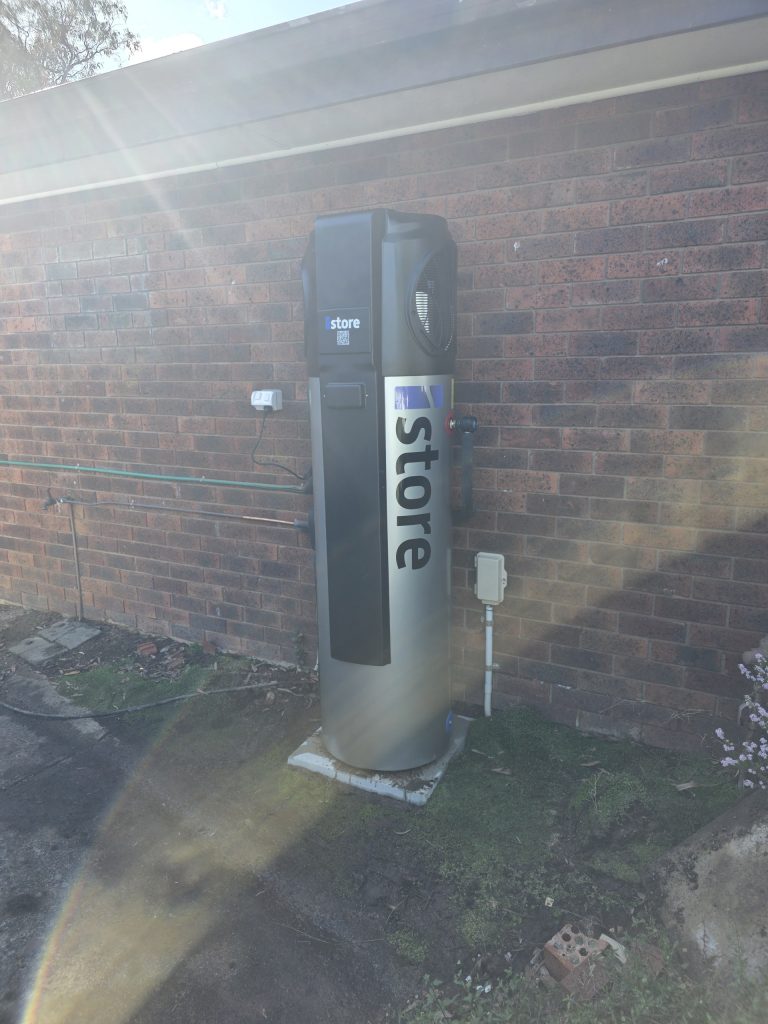
iStore 180 L R290 Heat Pump Hot Water Changeover in Boronia
A failed Vulcan Freeloader gas storage hot water unit replaced with an iStore 180 L R290 all-in-one heat pump hot water system.
View iStore 180 L R290 Heat Pump Hot Water Changeover in Boronia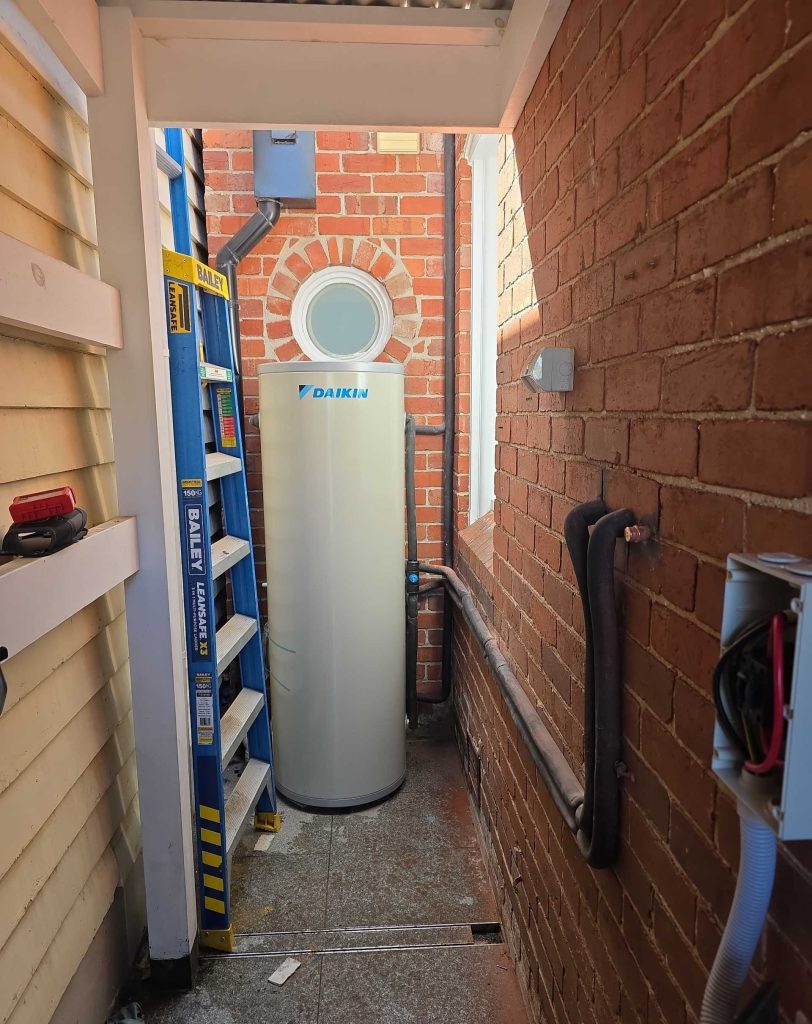
Daikin CO2 Heat Pump Hot Water Changeover in Middle Park
A wall-mounted Rinnai instantaneous gas hot water unit changed over to a Daikin CO2 split heat pump arrangement, with the storage tank in a narrow side passage and the outdoor…
View Daikin CO2 Heat Pump Hot Water Changeover in Middle Park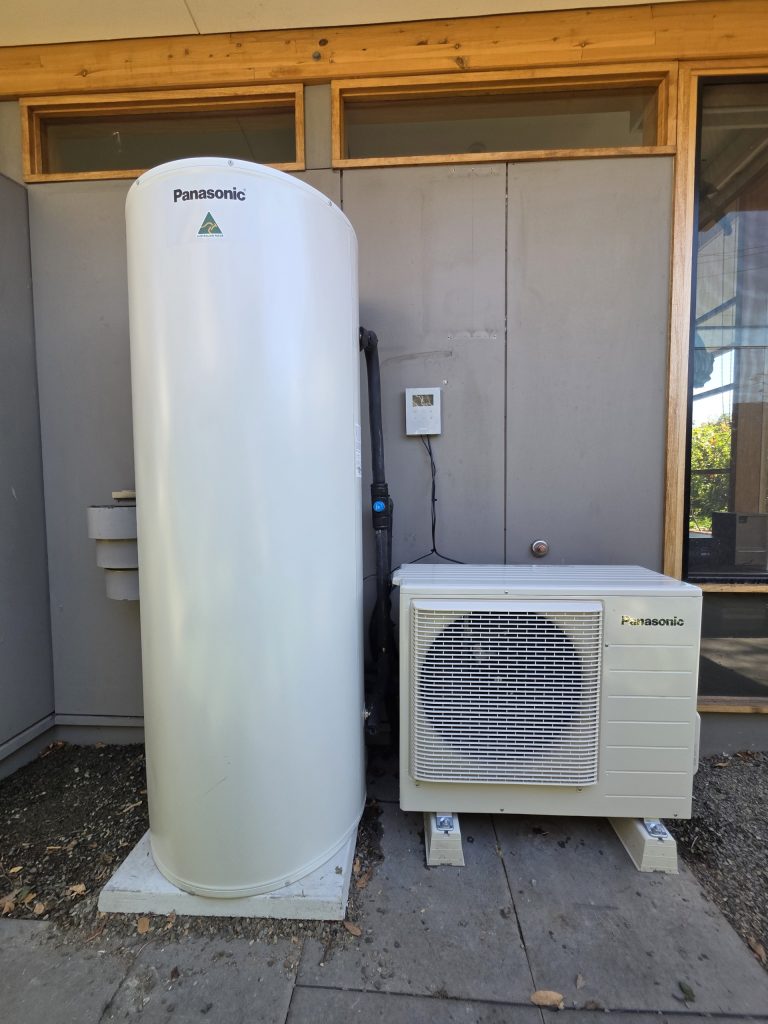
Panasonic CO2 Heat Pump Hot Water Upgrade in Clifton Hill
An ageing gas instantaneous hot water system replaced during a home renovation with a Panasonic CO2 split heat pump, 250 litre stainless steel cylinder, 4 kW outdoor unit and Wi-Fi…
View Panasonic CO2 Heat Pump Hot Water Upgrade in Clifton Hill