
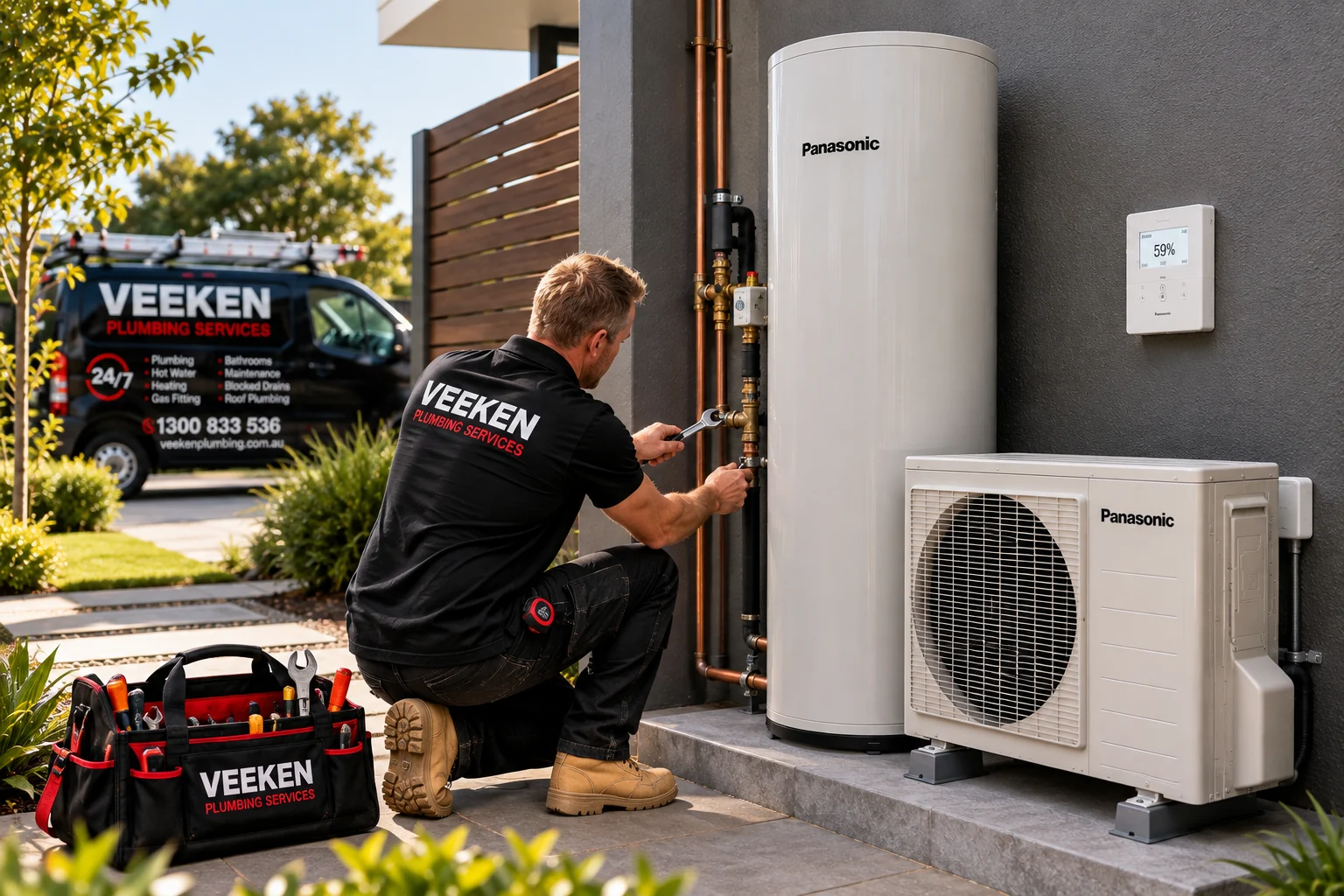
Local Heat Pump Hot Water Support
Define The Hot Water Load Before Selecting Equipment
Bayswater combines residential areas with commercial and industrial activity. A heat pump serving a household has a different demand profile from one proposed for staff facilities or another business use. We establish the purpose, peak period and acceptable interruption before discussing equipment.
Veeken Plumbing provides heat pump installation, replacement, repair assessment and servicing in Bayswater. We coordinate plumbing and electrical requirements and explain how the proposed system will be commissioned. Explore the technology on our Heat Pump Hot Water authority page.
Our Bayswater service page covers wider residential, commercial plumbing and mechanical support.
Heating Stored Water With Energy From The Air
A heat pump hot water system uses a refrigeration cycle to collect heat from the surrounding air and transfer it into water stored in an insulated tank. Electricity powers the compressor, fan and controls, while most of the heat delivered to the water is transferred from the surrounding air rather than produced by a conventional resistance element.
Collects Heat From The Air
The outdoor unit draws air across the heat exchanger and the refrigeration circuit captures usable heat from that air. Clear airflow around the equipment is important for normal operation and future servicing.
Transfers Heat Into Stored Water
The refrigeration cycle raises the temperature of the collected heat and transfers it into the hot water system. The heated water is then stored ready for household use.
Controls When The System Runs
Depending on the system, operating modes and timers can help manage when water is heated. The appropriate setup depends on household demand, electricity tariffs, solar generation and the selected equipment.
What We Assess Before Recommending A Heat Pump
Household Demand
People in the household, shower habits, baths and peak hot water use help determine suitable storage and recovery capacity.
Existing Services
We assess the existing hot water system, plumbing, electrical supply, drainage and any gas services affected by the changeover.
Space & Access
The installation position needs appropriate clearances, airflow, drainage, service access and practical pipework routes.
Airflow & Noise
Unit position matters for free airflow and for keeping operating noise appropriately separated from bedrooms and neighbouring properties.
Solar & Tariffs
Existing solar PV and electricity tariffs can influence how the system is configured and when water heating is scheduled.
Controls & Support
Controls, operating modes, warranty requirements, parts availability and future servicing are considered before recommending a system.
Bayswater Property And Plant Access
Coordinate Equipment Access With Business Or Household Operations
The Bayswater Structure Plan recognises the area’s residential, commercial and industrial geography. For heat pump work, local relevance comes from the actual site: a side passage at a home, secure service yard, shared plant area or loading-zone restriction can each change the installation sequence.
At an occupied premises we identify the site contact, induction or access rules, working hours and systems that cannot be isolated without notice. Equipment selection must reflect the actual hot water use; commercial demand should not be inferred from a building label alone.
We check airflow, sound-sensitive areas, condensate drainage, service clearances and the route to existing hot-water pipework. Electrical capacity and any redundant gas connection are assessed with the relevant trades before the changeover proceeds.
Maintenance Evidence
Use Records And Downtime Risk To Compare Repair With Replacement
A model number, fault code and previous reports can shorten the path to a useful assessment. We consider condition, parts support, warranty and how another failure would affect the property. A business may weigh downtime differently from a household, but neither should be pushed into replacement without evidence.
When a new system is justified, the proposal should state capacity, installation work, controls and handover. See hot water replacements and the wider hot water systems range. If the current unit remains viable, our repair and hot water servicing pages outline the alternatives.
For solar-equipped premises, daytime operation may reduce grid use during suitable periods. Generation, demand, tariffs and controls should be reviewed rather than assuming the same schedule works for every property.
From Assessment To Handover
A Five-Step Heat Pump Installation Process
1. Establish Demand
We discuss the existing heater, household or premises use, peak periods and the reason for repair or replacement.
2. Inspect The Site
Possible positions, access, airflow, drainage, plumbing, electrical supply, sound and decommissioning work are assessed.
3. Define The System And Scope
Suitable equipment, included trade work, controls and any current eligibility steps are explained before work is agreed.
4. Install And Commission
The agreed trades complete the changeover, test the installation and commission the selected heat pump system.
5. Complete The Handover
We explain principal controls and operating information and provide the applicable installation documentation.
Victorian Rebates And Discounts
Verify The Current Program Before Work Starts
Eligible Victorian households or properties may be able to reduce the upfront cost of approved heat pump hot water work through current programs. Eligibility depends on the applicant, property, existing system, product, provider and rules in effect at the time. A discount should not be assumed before those details are checked.
Review the current Solar Victoria hot water rebate and Victorian Energy Upgrades hot water discounts. The Victorian Government’s hot water buyer’s guide also covers demand, climate, placement, noise, solar and controls. Program values and approved product lists can change.
Common Questions
Heat Pump Hot Water FAQs For Bayswater
Can you assess heat pump hot water for a Bayswater business?
Yes. We need the purpose of the hot water, demand pattern, equipment access, operating constraints and acceptable downtime before determining suitable options.
Is a commercial heat pump the same as a household unit?
Not necessarily. Capacity, recovery, redundancy, controls and installation requirements depend on the use. Product selection should follow the site assessment.
What site information should a facility manager provide?
Provide model details, service history, photos where safe, site contacts, access procedures, operational restrictions and any known electrical or plumbing information.
Can installation be planned around business hours?
Access and interruption can be discussed during scoping. The final sequence depends on the work, site rules, equipment and trade availability.
What if the existing heater can still be repaired?
We explain the repair path where practical, including relevant limits such as parts, condition or warranty. Replacement is considered where it better addresses reliability and site needs.
Can a household heat pump be positioned beside a fence?
Only if product clearances, airflow, drainage, service access and the effect on neighbouring property are satisfactory. The specific unit and site determine the answer.
How are rebates handled for business installations?
Current Victorian Energy Upgrades rules include defined eligibility and provider requirements. The proposed equipment and use need checking before a discount is assumed.