
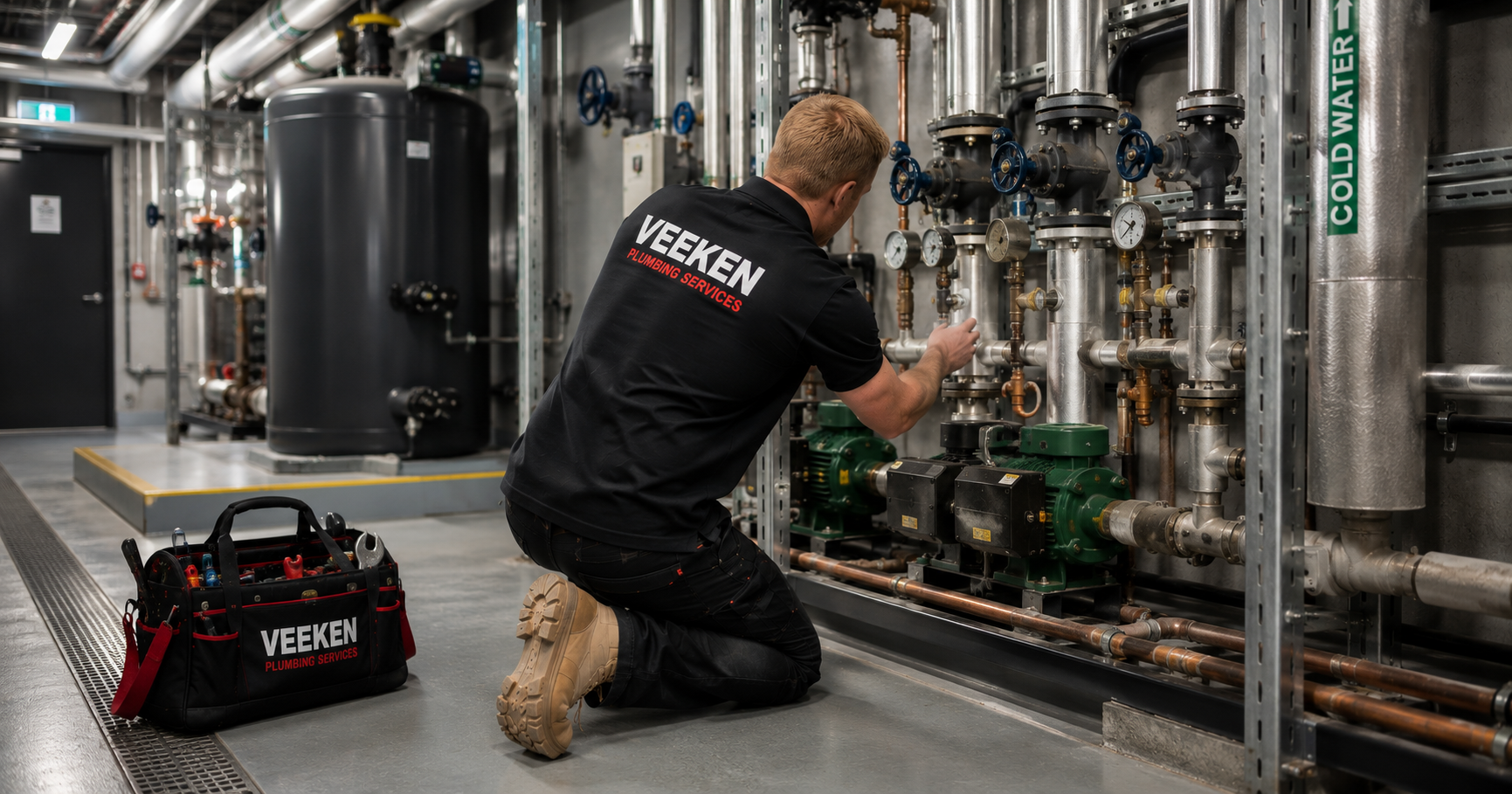
Preventative Maintenance
Preventative Maintenance support delivered as part of Veeken Plumbing’s Mechanical Services service for Melbourne properties.
Look for Patterns That Deserve a Decision
Changed Equipment Condition
New noise, vibration, water, corrosion, dirt loading or another accessible condition change may justify closer review according to the equipment and agreed scope.
Recurring Fault or Repair History
Repeated symptoms or repairs can indicate that an isolated fix should be considered within the asset’s wider history.
Controls and Trend Information
Available alarms, sensor information or operating trends can help identify drift or changed behaviour, but they remain evidence to assess rather than a diagnosis by themselves.
Building Consequence
The same condition can carry a different priority depending on the areas served, occupancy, available redundancy and effect of an outage.
Make the Priority Understandable
Record the Finding
Connect the observed condition or changed operation to the correct equipment and date.
Review History and Consequence
Consider recurrence, previous work, areas served and what another deterioration or failure would affect.
Set the Priority
Separate routine monitoring from further investigation, repair or replacement planning that needs a decision.
Track the Outcome
Keep completed work and deferred recommendations visible so the next review starts with useful history.
Using Condition Information Before a Breakdown
How do preventative and scheduled maintenance work together?
Preventative maintenance describes the purpose of work intended to reduce avoidable deterioration or failure. Scheduled maintenance organises identified tasks at agreed times. A scheduled task can therefore be preventative, while condition, history and operating requirements can inform what is included and how it is prioritised.
Can preventative maintenance stop every breakdown?
No. It can identify some accessible deterioration and recurring patterns where practical, but it cannot guarantee against concealed defects, sudden failures or issues outside the agreed work.
What information makes preventative maintenance more useful?
Equipment identification, condition changes, recurring faults, repair history, controls or trend information, areas served and previous recommendations all help establish context.
How are preventative findings prioritised?
The priority can consider actual condition, recurrence, equipment function, consequence of failure and repair practicality. Monitoring, investigation, repair and replacement should remain distinct recommendations.