
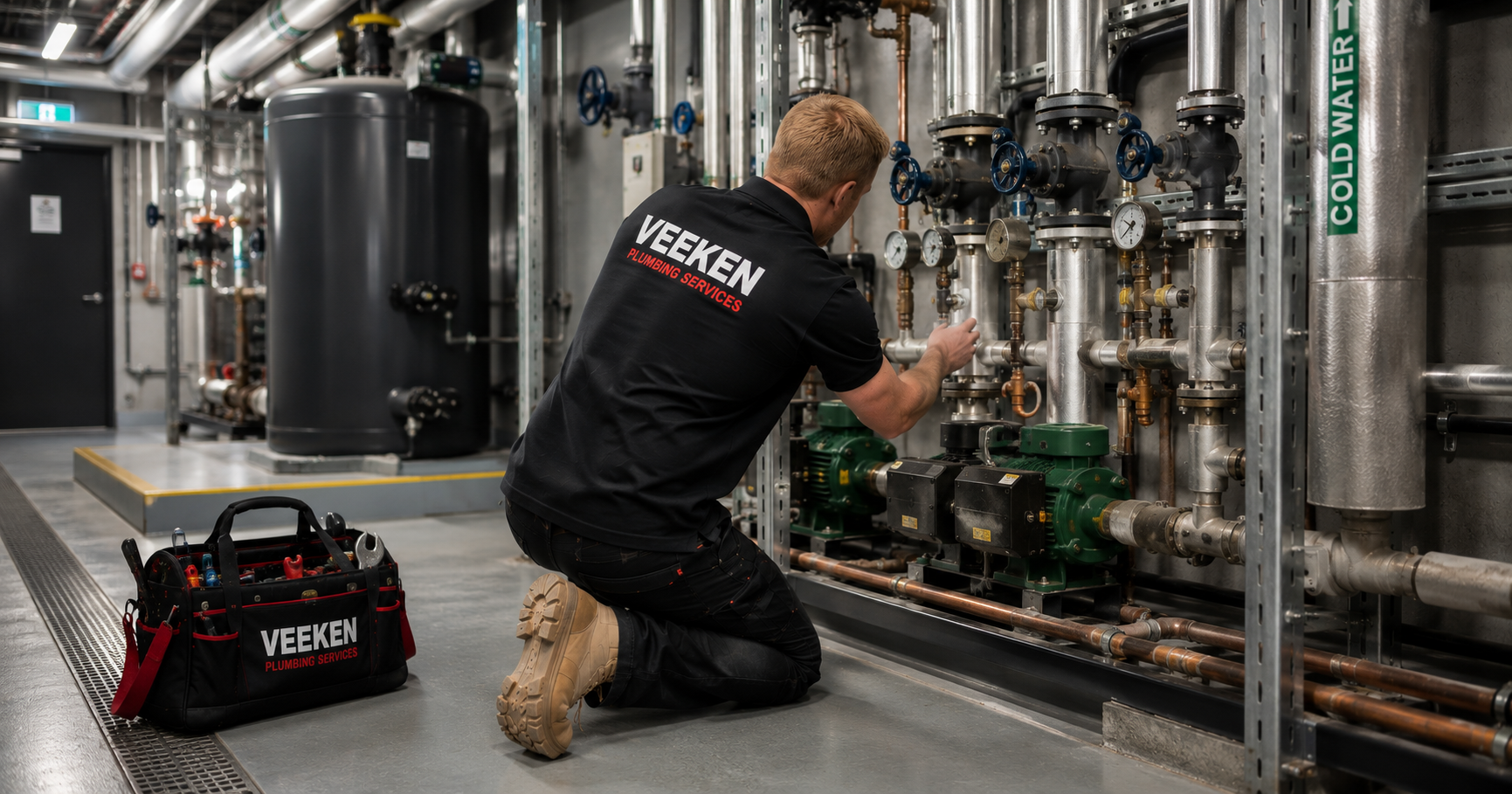
Equipment Replacements
Equipment Replacements support delivered as part of Veeken Plumbing’s Mechanical Services service for Melbourne properties.
Compare the Practical Paths Before Work Is Approved
Condition and Fault Recurrence
One repairable fault may not justify replacement. Repeated faults, deteriorating condition or several related issues can change the longer-term assessment.
Parts and Repair Practicality
Availability, compatibility, access and the extent of repair work can affect whether another repair remains a sensible option.
System and Control Compatibility
The Australian Government notes that HVAC performance depends on plant, delivery and emission systems working together. Replacement planning should consider controls and connected equipment, not only the failed item.
Building Impact and Work Planning
Removal routes, shutdown windows, occupied areas and temporary operating arrangements can influence the replacement scope and sequence.
The New Equipment Must Fit the Wider System and Site
Confirm the Required Duty
Understand the areas or processes served, operating pattern and any changed building requirement before selecting the replacement path.
Identify Interfaces
Controls, pipework, ductwork, drainage, electrical supply and connected plant may affect compatibility and the work needed around the new equipment.
Plan Removal and Return to Service
Access, isolation, removal, installation coordination and appropriate testing need to be considered before the property team approves the work.
Before You Replace Mechanical Equipment
Does older equipment always need to be replaced?
No. The decision should consider actual condition, diagnosis, repair history, parts, compatibility and the property’s requirements. Age can provide context but should not be the only reason.
What information helps compare repair and replacement?
Provide the equipment details, fault and condition findings, service and repair history, areas served, controls, access requirements and the effect another failure would have on the property.
Why does connected-system compatibility matter?
Mechanical equipment operates with controls, delivery systems and other plant. A replacement needs to fit those interfaces and the required duty rather than simply matching one visible component.
Can replacement work be planned around building operations?
The scope can consider access, shutdown windows and occupied areas. The practical sequence depends on the actual equipment, site requirements and any temporary arrangements available.